Why Muscle Matters More With Age
From about age 30, we begin to lose muscle mass. The decline is slow at first, but after 50 it accelerates. By the time many people reach their 70s or 80s, they may have lost up to 50 percent of their muscle. This process, known as sarcopenia, is one of the strongest predictors of frailty, falls, and loss of independence.
Strength training is the antidote. Unlike many changes that come with age, muscle loss is highly reversible. Even people in their 70s, 80s, and beyond can build strength and muscle with regular resistance training.
Source:
https://www.ncbi.nlm.nih.gov/pmc/articles/PMC6769764/

The Benefits of Strength Training After 50
Stronger muscles, stronger bones
Resistance training not only builds muscle, it stimulates bones to maintain density. This helps prevent osteoporosis and reduces the risk of fractures.
Better balance and fewer falls
Stronger legs, hips, and core improve stability, making falls less likely. Falls are a major threat to independence, so prevention here is critical.
Improved metabolism
Muscle tissue burns more energy at rest than fat tissue. Strength training boosts metabolism, helping to manage weight and blood sugar.
Reduced risk of chronic disease
Resistance training improves insulin sensitivity, lowers blood pressure, and supports cardiovascular health. It reduces risk of type 2 diabetes, heart disease, and even cognitive decline.
Better quality of life
Beyond the medical benefits, strength training makes everyday tasks easier — climbing stairs, carrying groceries, or standing from a chair without strain.
Sources:
https://www.health.harvard.edu/staying-healthy/strength-training-builds-more-than-muscles
https://www.cdc.gov/physicalactivity/basics/older_adults/index.htm

What Strength Training Looks Like
Strength training is not just about heavy barbells in a gym. It covers any activity that makes your muscles work against resistance.
Options include:
- Free weights: dumbbells, barbells, kettlebells
- Resistance bands: affordable, portable, joint-friendly
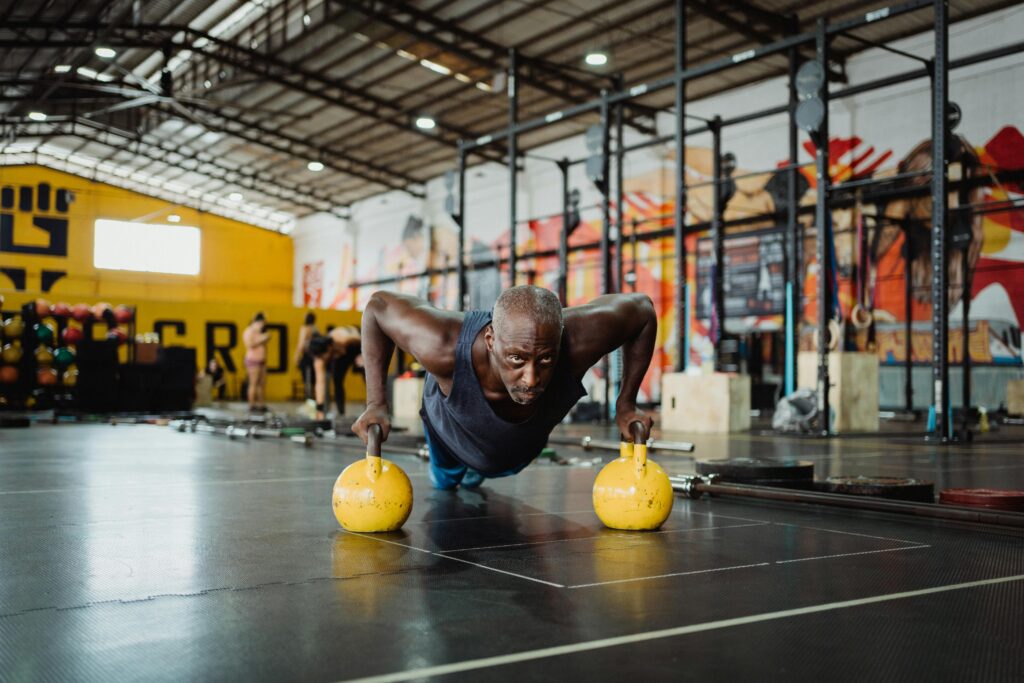
- Bodyweight training: squats, push-ups, planks, step-ups
- Machines: safe and guided, especially for beginners
- Everyday strength: carrying groceries, climbing stairs, yard work
The key is progression. Muscles adapt quickly, so resistance must gradually increase — heavier weights, more repetitions, or slower, controlled movements.
How Often and How Much?
Most guidelines recommend two to three sessions per week, targeting all the major muscle groups: legs, hips, back, chest, shoulders, arms, and core.
- Start light: 1–2 sets of 8–12 repetitions per exercise
- Focus on form first, then resistance
- Rest 48 hours between sessions for the same muscle group
- Combine with cardio, flexibility, and balance training for a full program
Source:
https://www.nia.nih.gov/health/strength-training-older-adults
Safety and Common Myths
Myth: Strength training is unsafe for older adults
Fact: With proper guidance and progressive loading, it is safe and highly effective. Injuries usually result from poor form or trying to progress too quickly.
Myth: You need heavy weights to benefit
Fact: Even light weights or resistance bands, if used consistently and with good form, build strength.
Myth: It is too late to start
Fact: Research shows muscle growth and strength gains are possible well into the 80s and 90s.
Safety tips: warm up, prioritise form, increase resistance gradually, and do not ignore pain signals.
Sources:
https://www.ncbi.nlm.nih.gov/pmc/articles/PMC6769764/

Fueling Strength: Protein and Recovery
Building muscle requires raw material. Protein is the most important macronutrient for this, and older adults need more than they realise. Aim for 1.2 to 1.6 grams of protein per kilogram of bodyweight daily, spread across meals.
Creatine can also support strength gains and recovery, particularly when combined with resistance training. Adequate sleep and rest between sessions are equally important — muscle grows during recovery, not during the workout itself.
Sources:
https://www.ncbi.nlm.nih.gov/pmc/articles/PMC7233499/
https://www.ncbi.nlm.nih.gov/pmc/articles/PMC6490732/
Why Prevention Works
Strength training is one of the few interventions that truly reverses age-related decline. It protects bones, muscles, metabolism, and independence all at once. No pill comes close.
The earlier you start, the better, but it is never too late. Even beginning in your 70s or 80s can add strength, reduce fall risk, and improve daily quality of life.
Final Word: Stronger for Longer
Strength training after 50 is not about bodybuilding. It is about maintaining the strength to live independently, protect your bones, and keep doing the activities you enjoy.
Pick up the weights, bands, or even just your own bodyweight. Start small, progress steadily, and stay consistent. The reward is a stronger, more capable version of yourself — for decades to come.